


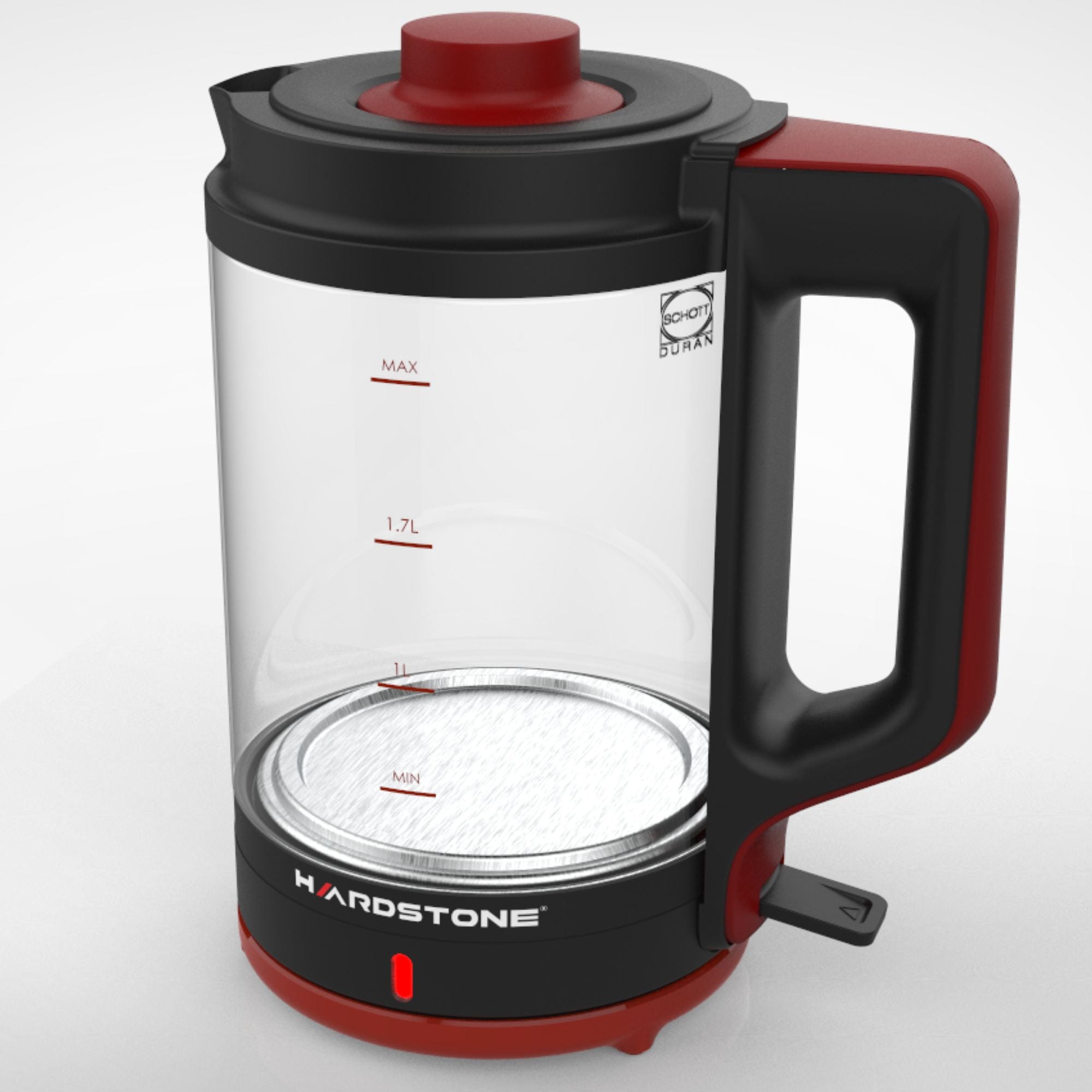
Project Overview
Hardstone Appliance, an established appliance manufacturer operating across the Middle East, commissioned Cadrill to perform comprehensive reverse engineering and mechanical product development. The project focused on analysing a benchmark Bosch tea maker as part of Hardstone's development cycle, digitising its intricate physical form and engineering production-ready tooling.
Cadrill’s main involvement spanned high-precision metrology inspection, surface and solid reconstruction in SolidWorks, mechanical assembly validation and the complete design of injection moulds required for manufacturing the plastic components.
The Engineering Challenge
Consumer domestic appliances involve sophisticated organic ergonomics, complex multi-part snap fits, internal ribbing, heating element interfaces and tight parting line alignments. Because no original digital design data was available, every geometric feature had to be captured and verified from physical parts.
The challenge required combining multiple measurement techniques to capture both organic external aesthetic curves and precise internal mechanical clearances for switchgear, base couplings and sealing gaskets.
Cadrill's Design Approach
The reverse-engineering workflow progressed systematically through precision measurement, solid modelling and tooling development:
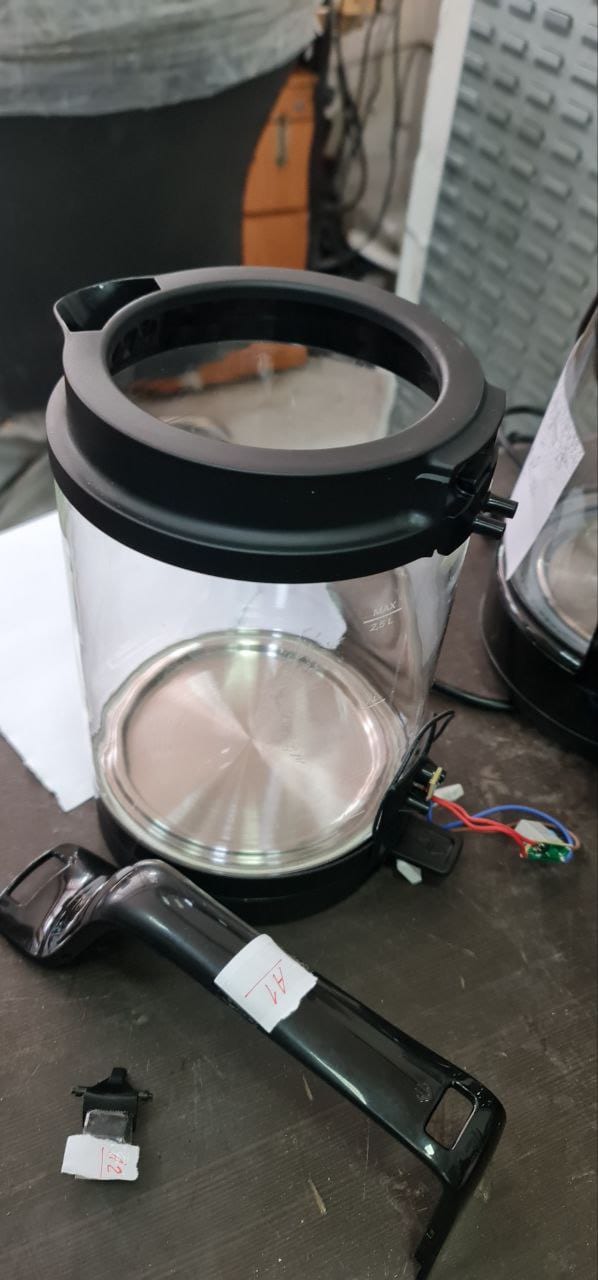
Coordinate Metrology & 3D Scanning: Existing physical components were comprehensively measured using Coordinate Measuring Machines (CMM) for critical mounting datum points and alignment bores, optical 3D surface scanning for compound organic curvature, and calibrated manual measuring tools for feature-level confirmation.
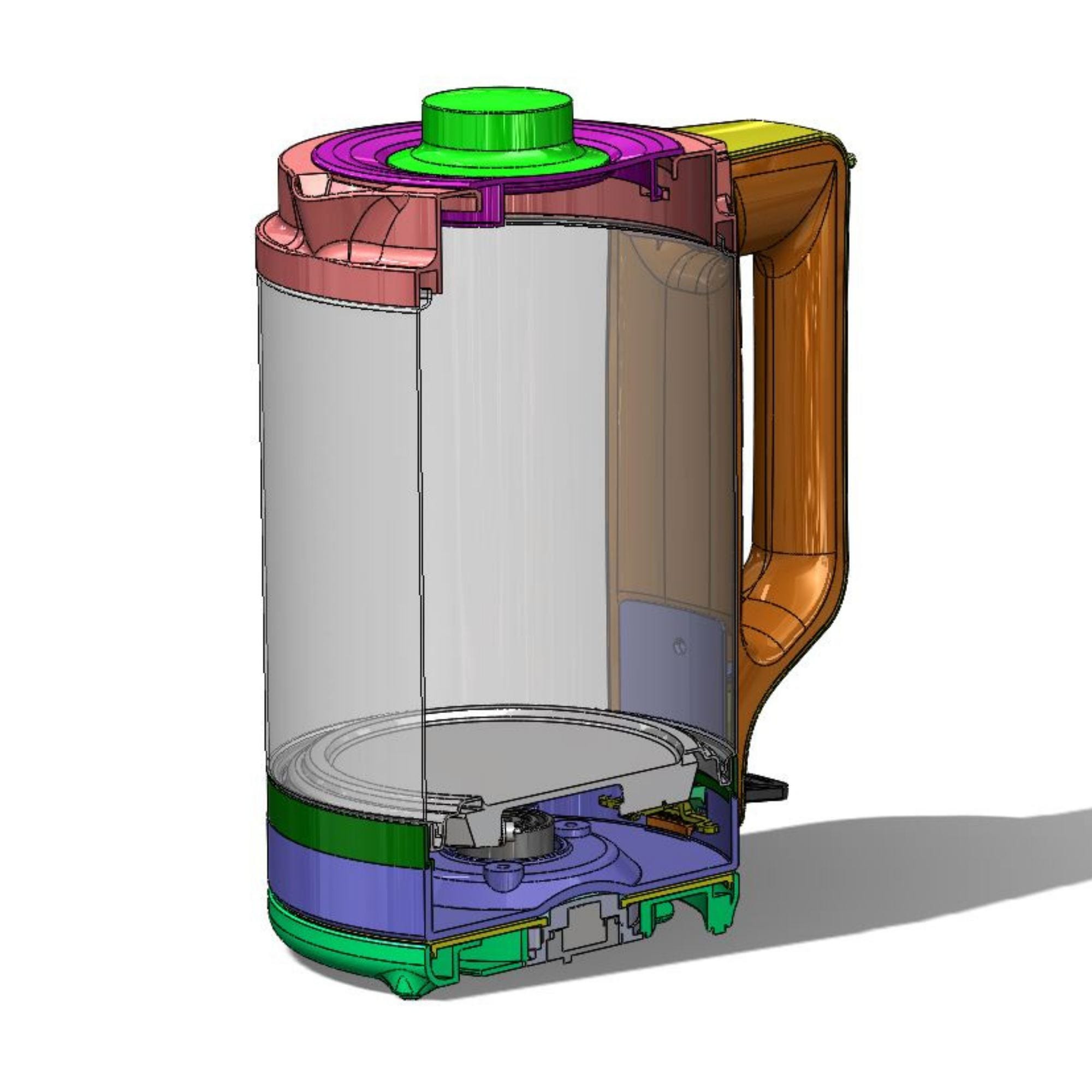
Parametric SolidWorks Reconstruction: Raw point cloud and mesh data were imported and converted into native, parametric SolidWorks solid and surface models. Draft angles, wall thicknesses and internal strengthening ribs were modelled with strict manufacturing feasibility in mind.
Mould Tooling Architecture: Cadrill engineered the multi-cavity plastic injection moulds for the appliance's housing and handle components. Core and cavity splits, parting lines, side actions, slider mechanisms and ejection pin locations were fully detailed to ensure reliable demoulding.
Design Development & Metrology Validation
Manufacture-Ready Design
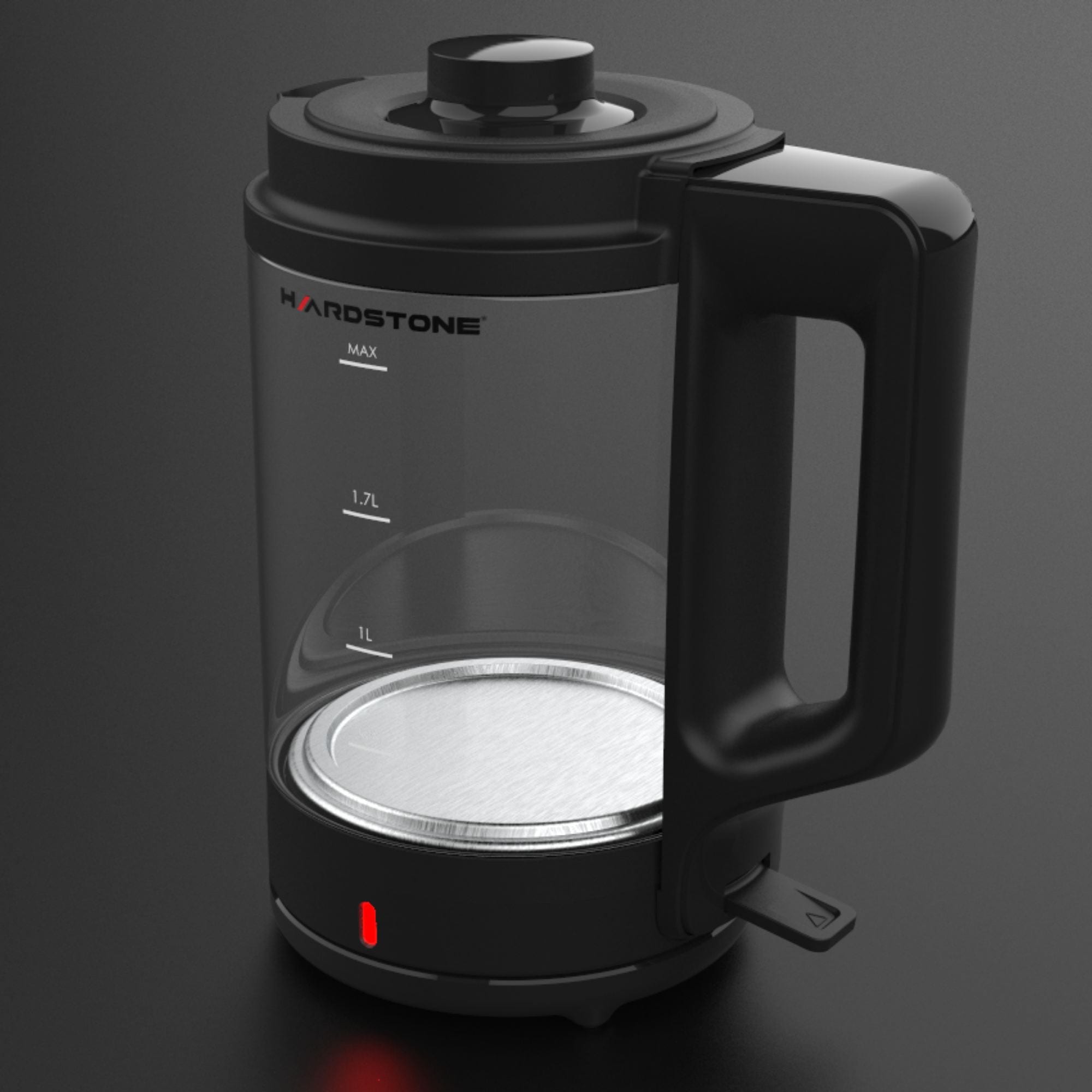
Cadrill delivered a complete manufacture-ready engineering package to Hardstone Appliance, bridging product design and tooling fabrication:
- Parametric SolidWorks part files for all plastic injection-moulded components with verified draft angles.
- Complete mould assembly models including cavity blocks, core inserts, sliding cores and cooling channel layouts.
- 2D fabrication drawings specifying critical machining tolerances for mould toolmakers.
- Component assembly drawings with detailed exploded views documenting assembly sequencing.
Project Outcome
By partnering with Cadrill, Hardstone Appliance acquired verified 3D CAD models and production mould designs without relying on outdated 2D drawings or trial-and-error prototyping. The combination of CMM metrology, 3D scanning and rigorous SolidWorks modelling enabled Hardstone to proceed straight to mould tooling manufacture with full dimensional confidence.
Related Mechanical Design Services in Liverpool
If your company requires plastic injection product design, CNC prototyping or reverse engineering in Liverpool, Cadrill provides full-cycle mechanical CAD and manufacturing capabilities. From 3D scanning and CMM inspection to SolidWorks solid modelling, precision CNC machining and manufacture-ready mould tool design, we support consumer goods innovators and manufacturers across Liverpool, Merseyside and the wider UK.